

The Dark Web, also known as the Dark Net, is a part of the Internet that is not accessible through regular web browsers. To access it, specialized software like the Tor browser is required.
The Dark Web is often associated with illegal activities-such as cybercrime, drug trafficking, child exploitation, and terrorism-but it was originally developed for legitimate, even noble purposes, such as ensuring anonymity and providing internet access to whistleblowers, journalists, and citizens within authoritarian regimes plagued by censorship.
In fact, even Facebook and Twitter have versions accessible via the Dark Web.
The depths of the web, where anonymity reigns, often spark the curiosity of internet users. But beyond curiosity, there are solid reasons why one might need to navigate this world. This is especially true for cybersecurity professionals, particularly in threat intelligence, who monitor criminal group activity to gain a strategic advantage in preventing cyber threats.
In this article, we'll explore the top search engines of the Dark Web-enigmatic tools that allow access to an alternative dimension of the Internet, where secrecy and privacy are paramount.
Accessing the Dark Web and Taking Precautions
Before diving into our selection of search engines, a few important warnings are necessary.
Without proper precautions, the Dark Web can be a hazardous space, filled with potential risks to your privacy and security. Before accessing it, it's critical to take steps to avoid exposing your IP address and device to a lawless environment.
If you're unsure how to do that, check out our guide to safe Dark Web browsing.
1. DuckDuckGo
DuckDuckGo is a well-known search engine often compared to Google in terms of effectiveness for Dark Web browsing. It's recognized as one of the best privacy-focused search engines, and is the default option on Tor browsers, though it can also be used in other browsers.
With its user-friendly interface, DuckDuckGo features a central search bar and displays results in a format similar to Google. In addition to being a Deep Web search engine, it also works perfectly on the surface web.
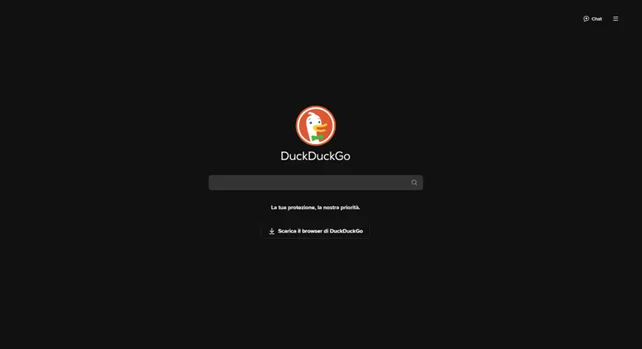
What sets DuckDuckGo apart is its strict no-logging policy: it does not store user search history or personal information. This makes it a powerful search engine and an essential privacy tool, especially when used with an anonymous browsing setup.
However, DuckDuckGo may return fewer results compared to other Dark Web engines. Still, it remains a reliable choice for users seeking security and privacy in their online exploration.
2. Ahmia fi
Ahmia.fi is a search engine built specifically to allow access to the Dark Web or Dark Net. It's one of the few search engines that allow true exploration of the Dark Web and has been praised for making this hidden space more accessible.

Unlike many other Dark Web engines, Ahmia enforces a zero-tolerance policy toward abusive content, automatically excluding sites linked to child abuse material.
Ahmia is also available on the regular web and supports searches on the i2p network. You can visit its .onion domain at this ONION link.
3. Torch
Torch is considered one of the most well-known and long-standing search engines on the Dark Web. Even in 2025, it remained one of the most recommended Tor search engines in specialized forums.
Torch scans and indexes .onion sites daily, offering one of the largest searchable databases in the Dark Web.
Thanks to an intuitive, Google-like interface and fast loading speeds, Torch offers a familiar experience while enhancing user navigation.

⚠️ Warning: Like many Dark Web search engines, Torch does not filter indexed sites, increasing the chance of encountering dangerous or malicious content during your browsing.
You can access Torch through its ONION link.
4. Haystak
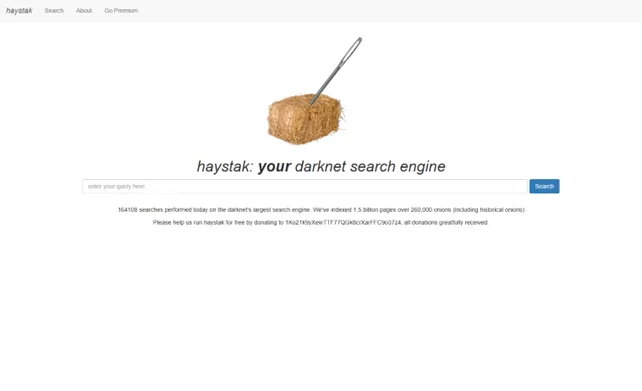
Haystak is a Dark Web search engine designed for the Tor network. It claims to have indexed over 1.5 billion pages, including more than 260,000 websites, making it a highly useful resource for those exploring the Dark Web.
Haystak also offers a paid version with advanced features like:
- Searching with regular expressions
- Accessing defunct .onion sites
- Using their API
You can visit Haystak through its .onion domain at this ONION link.
5. The (Original) Hidden Wiki
Although not technically a search engine, The Hidden Wiki deserves a spot on this list for its role in helping users explore the Dark Web.
Functioning more like a directory, it organizes and indexes links, facilitating navigation in this hidden part of the Internet.
You can think of The Hidden Wiki as the Dark Web version of Wikipedia, simplifying Tor browsing with a categorized list of direct links to both .onion sites and surface web pages.
The Hidden Wiki, which has been in operation for over a decade, serves as a community-driven directory of ".onion" websites where content is created and edited by its users. It is widely regarded as a primary resource for both newcomers and experienced users looking for trusted and constantly updated information on TOR sites.
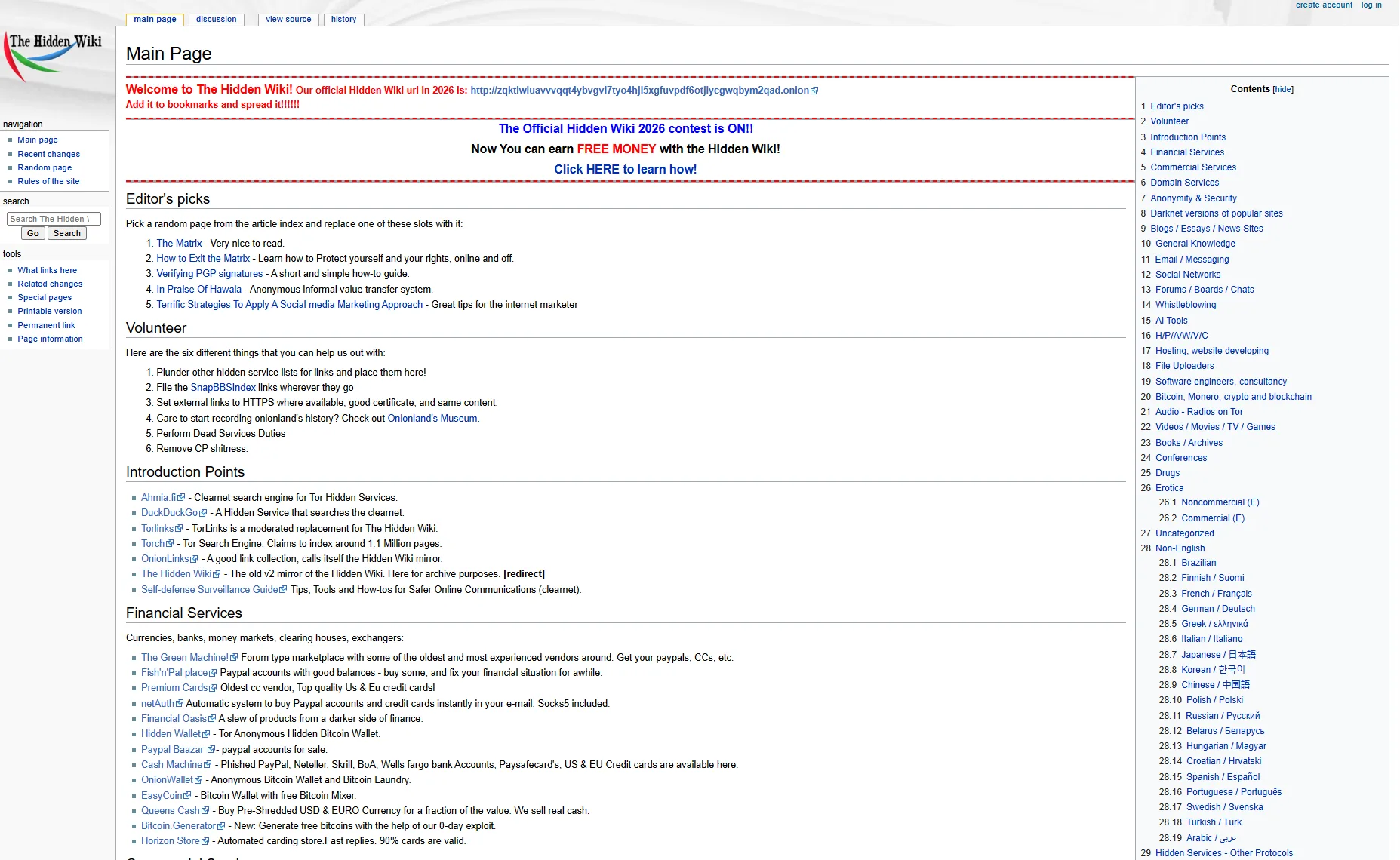
Unlike search engines that index content without restrictions (like Torch), The Hidden Wiki uses filters to block many scam sites found on the Dark Web.
You can access it using this ONION link.
Note: multiple versions of The Hidden Wiki exist; this article refers to the original, community-maintained instance.
Conclusion
Whether you're a cybersecurity analyst, an investigative journalist, or simply curious, knowing how to navigate the Dark Web-and which tools to use-is critical.
Stay safe, stay anonymous, and always take precautions.