
Is there anything more frightening than discovering your company's data has ended up on the Dark Web? Probably not, at least for those working in cybersecurity.
In recent years, marketplaces like BreachForums, Exploit, and Genesis Market have hosted millions of stolen credentials, corporate databases, system configurations, and even entire dumps of internal emails.
In many cases, victims discover the breach only after the data has already been sold or shared publicly - as happened recently to a major European IT service provider, which learned of its compromised servers only when a threat intelligence analyst reported a 70 GB package of corporate data for sale for $2,000 in Bitcoin. The leak had not yet appeared on any "data breach notification" portals.
Understanding the technical and behavioral indicators that suggest a data leak has been published or put up for sale is now a crucial skill for security teams.
In this article, we analyze the five main warning signs, the technical mechanisms behind them, and how to verify them using threat intelligence and OSINT tools.
How Data Sales Work on the Dark Web
In short: the Dark Web represents only a small portion of the Internet, accessible through tools such as Tor or I2P, but it hosts a highly active ecosystem of marketplaces, forums, and closed channels where stolen data is traded.
Criminal data brokers typically operate on several levels:
Data collection: through infostealer malware, credential stuffing, or direct system compromise.
Evaluation and filtering: verifying data quality, removing duplicates, and categorizing by sector or source.
Sale or public leak: uploading datasets to underground forums or dedicated platforms (often via external file hosting or onion links).
Secondary resale: other actors buy dumps for phishing campaigns, financial fraud, or ransomware operations.
The business model has grown sophisticated: some groups now offer "data-as-a-service", providing subscription-based access with regular updates. This makes it difficult for a company to know when and where its data is actually exposed - unless constant monitoring is in place.
1. Presence of Samples with Recognizable Patterns
The first and most obvious signal is the publication of partial samples of a database.
Threat actors rarely publish an entire dataset at once; they usually release limited portions - for example, the first 100 rows of an SQL dump or a partial list of corporate emails - to prove authenticity.
An analyst can identify a potential leak through indicators such as:
- Corporate domain present in email addresses (e.g., `@company[.]com`).
- Usernames consistent with internal standards (e.g., `name.surname`).
- Table structure matching known database schemes (e.g., `users`, `clients`, `invoices`).
A typical "sample leak" for sale might appear as an SQL snippet:
INSERT INTO users (id, name, email, password) VALUES
(1, 'm.rossi', '[email protected]', 'hash:SHA1:ab3f...'),
(2, 'l.bianchi', '[email protected]', 'hash:SHA1:34ac...');
Verifying such a leak requires cross-analysis with known hashes or public data to determine whether the values truly belong to compromised corporate systems.
Tools like hashcat, Ciphey, or DeHashed can help correlate or de-anonymize these samples.
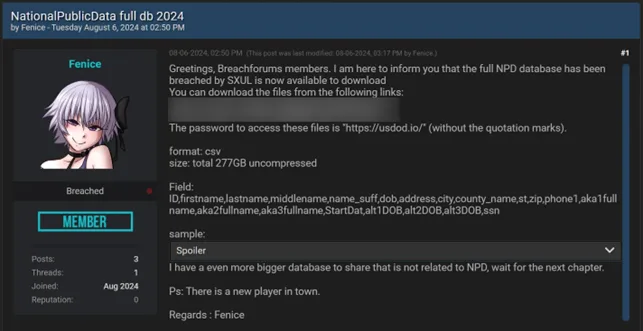
2. Indicators in Leak Announcement Channels
Many ransomware gangs and criminal groups manage Telegram channels, forums, or "leak sites" where they announce compromised victims. Even without an actual dump, the appearance of your company's name in these spaces is an indicator that should not be ignored.
These announcements often include:
- Company name or Internet domain.
- Description of the stolen data ("customer database", "internal emails", "contracts").
- Proof of access: screenshots of directories, backups, or internal panels.
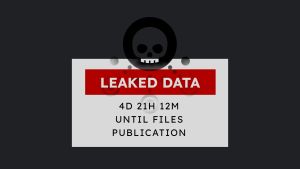
- Countdown timers for data publication ("data leak countdown").

A concrete example is the leak blogs operated by LockBit or Cl0p, where victim names are first published, followed later by the actual files.
Automated analysis of these sites through threat intelligence feeds (or via our dedicated section) enables immediate alerts whenever a reference to your domain or brand appears.
3. Unusual Activity in Underground Markets
A subtler but equally important sign is the sudden appearance of offers or keywords related to your company in underground marketplaces.
Often these are not full leaks but rather "RDP access", "VPN credentials," or "email dumps" containing direct or indirect references.
Threat intelligence analysts use specialized tools to perform targeted queries across .onion markets, searching for keyword combinations such as:
"company.com" OR "companyname" OR "company clients"
Consistent search results may indicate:
- An insider attempting to sell internal information.
- An access broker offering credentials to corporate systems.
- A credential-stuffing campaign producing a related dataset.
In many cases, this type of detection precedes the actual publication of a complete data leak by several weeks.
4. Correlation of IOC and Compromised Accounts
Another key indicator comes from monitoring Indicators of Compromise (IOC) linked to credential theft campaigns or infostealer malware. Dumps from stealers like RedLine, Raccoon, or Vidar are regularly uploaded to Telegram channels or sold in bulk.
If corporate domains or accounts appear among the stolen credentials or cookies, it means that some employees' machines have been infected - and that corporate data may already be circulating.
To identify such cases, it's useful to:
- Integrate IOC feeds from sources like ANY.RUN, Malpedia, or Abuse.ch.
- Automate searches for corporate domains within data stealer logs via APIs.
- Correlate evidence with internal systems (e.g., Active Directory, Okta, M365) to validate the compromise.
This type of analysis requires a proactive threat hunting approach but can provide early warning signs of corporate data exfiltration.
5. Distribution of File Hashes or Unique Metadata
Finally, a frequently overlooked indicator is the appearance of file hashes or unique identifiers (such as SHA256 or MD5) associated with corporate data in public repositories or underground forums.
Malicious actors often publish only the hashes of files to prove possession while keeping them encrypted until sold.
Example:
SHA256: 0d63f92ab7d3... - client_db_2024.zip - 1.3GB
A security team can monitor these traces using platforms like:
- MalShare or VirusTotal Intelligence (for shared hashes and metadata).
- Ahmia or OnionLand Search (for textual searches over Tor).
- SIEM solutions with YARA rules or regex-based matching for known patterns.
Correlating these hashes with corporate assets (e.g., legitimate backups or dumps) can confirm whether the published data matches materials actually exfiltrated.
Security Implications and Prevention
Detecting your data on the Dark Web is not just a matter of image or compliance - it has direct implications for operational security.
Once a leak is confirmed, it's essential to:
- Activate an incident response plan, prioritizing credential and access revocation.
- Assess the extent of damage, distinguishing between public, sensitive, and regulated data (GDPR, PCI-DSS, etc.).
- Notify partners or customers involved, particularly if personal information is included.
- Preserve evidence of the leak (links, hashes, timestamps) for forensic or legal purposes.
It's important to note that not every Dark Web reference implies a direct compromise - sometimes the data originates from old collections or duplicates.
However, thorough technical verification is crucial to avoid false positives or underestimations.
Conclusion
Knowing that your data could be for sale on the Dark Web is an operational reality that every organization must face.
The five indicators discussed - data samples, leak site announcements, underground market activity, compromised IOCs, and published hashes - represent the compass of a modern Dark Web intelligence system.
Monitoring them systematically allows organizations to anticipate the impact of a breach, often before it becomes public.
For security professionals, the challenge lies in combining automated scanning tools with contextual human analysis - capable of distinguishing noise from real signals.
Today, prevention is not limited to firewalls or EDR systems; it also depends on the ability to monitor the digital spaces where an organization's most sensitive asset - its data - can be sold to the highest bidder.